
According to a report by the Association of Democratic Reforms, the ruling party's assets rose to Rs 1,483.35 crore in 2017-18 over its previous financial year's declaration of Rs 1,213 crore.

Teary-eyed Congress leader D K Shivakumar on Saturday briefly belied the combative force he is for the Congress party, not just in the just concluded 2023 assembly polls, but on several crucial occasions in the past when his party needed him.

Did you know that 98 politicians with corruption cases have been given election tickets by various parties in the last 5 years?
The newly elected Legislative Assembly in Himachal Pradesh has seen a decline in the number of members who are facing criminal cases.
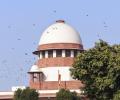
A five-judge constitution bench of the Supreme Court is scheduled to commence hearing from October 31 a batch of pleas challenging the validity of the electoral bond scheme for political funding of parties.
In Uttarkhand, 71 per cent of the MLAs (50 of 70 analysed) are graduates and have higher qualification and 27 per cent have criminal records, according to a report by the Association for Democratic Reforms.

The Association for Democratic Reforms, in association with the National Election Watch, has compiled the list of the poorest Members of Parliament. The list is based on the assets declared by the candidates, before the Election Commission, when they had filed their nominations for the Lok Sabha polls.
According to a report by the Uttar Pradesh Election Watch and the Association for Democratic Reforms, Samajwadi Party tops the list parties fielding tainted candidates. Vicky Nanjappa reports
Out of the 129 candidates contesting the Goa assembly elections, 30 candidates or 23 per cent declared criminal cases. Vicky Nanjappa reports.
The National Election Watch and the Association for Democratic Reforms states in it report and analysis that out of the 248 candidates 76 candidates or 31 per cent declared criminal cases against them. In 2007 assembly elections for Uttar Pradesh, 27 per cent candidates had declared criminal cases against themselves. Vicky Nanjappa reports.
As Gujarat braces for an election this year, it would be interesting to see the donations received by the political parties in the state, and the list of candidates who have a criminal background, says Vicky Nanjappa
Of the 114 constituencies going to polls in the first two phases in Uttar Pradesh elections, 41 are red alert constituencies -- they have three or more candidates with criminal records. According to the record of the candidates analysed by the Association for Democratic reforms, 36 per cent of the constituencies in the first two phases of UP polls are red alert ones. Of the 41 red alert constituencies, 28 have three candidates with declared criminal cases.

Uttar Pradesh Election Watch and the ADR have analysed the self-sworn affidavits of 45 of the total 53 ministers, including the chief minister.
Political parties may campaign against corruption and criminality, but it's the selection of candidates for the upcoming assembly polls that tells the real story.
Political parties may campaign against corruption and criminality, but it's the selection of candidates for the upcoming assembly polls that tells the real story.
The Foundation for Democratic Reforms and Lok Satta, along with some organisations will arrange a round table conference in New Delhi on April 24. The conference is for a consensus on the creation of a powerful and independent Lok Pal at the national level and Lokayuktas in states.
A report prepared by the Association for Democratic Reforms states that the total tax exemptions received by six national parties during financial years 2006 to 2009 is Rs 510.02 crore. Vicky Nanjappa reports
The data provided by the Association for Democratic Reforms states that out of thes 60 members of Legislative Assembly, 36 (or 60 per cent) are crorepatis.
When it comes to financial contributions/donations, political parties in the country seem to benefit a lot by them as a significant part of their income depends upon them.

According to the analysis, 37 of the 40 BJP MLAs and 29 of the 31 Congress legislators are crorepatis.
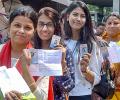
As many as 1,500, or 19 per cent, of all candidates contesting the Lok Sabha polls, face criminal cases, according to an analysis by election watchdog Association for Democratic Reforms (ADR).
In spite of the Election Commission's repeated pleas against the criminalisation of politics, few political parties have paid any heed to it and have continued to field candidates with a dubious record in the forthcoming Bihar assembly polls.
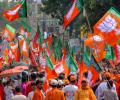
The BJP declared a total income of Rs 1917.12 crore during 2021-22 and spent Rs 854.467 crore or 44.57 per cent of it.
A report by the Association for Democratic Reforms states that none of the 60 newly-elected MLAs of the Manipur Assembly, has declared criminal cases against him/her.
The Bharatiya Janata Party has received more donations compared to the Congress in Himachal Pradesh in the last seven years, a study has found.
The story of Uttar Pradesh in the third phase of the assembly elections is no different from phase-II polls. One hundred and twenty one candidates out of the 317 have criminal candidates pending against them. Vicky Najappa reports.

Assam Chief Minister Himanta Biswa Sarma believes that the BJP could win more seats in the state by aggressively campaigning in minority-dominated areas. He attributed the party's recent success in the bypolls to its beneficiary schemes, which he claims have garnered support from the minority community. Sarma emphasized that the BJP will continue with its development work for all communities and has no plans for appeasement. He also gave an update on the Guwahati-North Guwahati bridge project, which is progressing well and is scheduled to be opened to the public in July 2025. Sarma also hinted at a possible cabinet reshuffle in the coming months.
The union territory of Puducherry has the dubious distinction of having the laziest legislators in India. A report shows that in comparison to the other four poll-bound states -- Tamil Nadu, Kerala, West Bengal and Assam -- the legislative assembly in Puducherry had the lowest number of sittings in the past 5 years.
It is bad enough that we have leaders with pending criminal charges against them. But what happens when the very same leaders get guns from the government?

In Kerala, 95 out of 135 MLAs, accounting for 70 per cent, have declared criminal cases against themselves.
According to a report by the Association of Democratic Reforms, 59 per cent of the MLAs (or 141 MLAs out of 241) in the Bihar assembly have criminal records pending against them. Comparatively, the percentage of tainted legislators in the last assembly was 35 per cent
A recent report put out by the Association for Democratic Reforms and National Election Watch revealed that 47 per cent of the newly-elected Uttar Pradesh assembly has candidates with criminal cases pending against them.
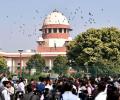
A bench of justices S Abdul Nazeer and V Ramasubramanian said the Kerala Police Act was the successor legislation of certain police enactments of the colonial era which aimed at scuttling the democratic aspirations of the indigenous population.

The average asset of the 92 re-elected members of Legislative Assembly in Karnataka is estimated at Rs 30.15 crore, according to the Association for Democratic Reforms and Karnataka Election Watch analysis.
The general elections are round the corner and there is a great deal of activity where the fielding of candidates is concerned. What we have noticed in the past few elections that there is a great deal of debate regarding the background of a candidate. The Association for Democratic Reforms has managed to create an awareness among the voters regarding the candidates that they have been voting for.

From 2014 to 2017, Gupta served as the assistant attorney general for civil rights under President Barack Obama, where she advanced criminal justice reform, prosecuted hate crimes, protected voting rights and fought against discrimination.
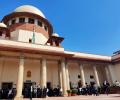
A bench of Justices Sanjiv Khanna and Dipankar Datta issued notice to the Centre on a plea filed by an NGO, Association for Democratic Reforms, and listed the matter along with other pending petitions on the issue for hearing in April.
'The number of candidates in Karnataka with a criminal background has come down by five per cent when compared to the 2004 election,' says Professor Trilochan Sastry of Karnataka Election Watch.
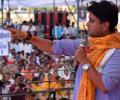
Total of 59 seats spread across 6 states and one Union Territory will go to polls in the sixth phase on May 12.
